
 Knowledge
The Great Legal Separation: Why Nature Has No Place in Law, and Why That Is the Point
2026-06-25 | by Cindano wa Gakuru
We are in a bus hurtling towards a cliff.
Not metaphorically, in the loose way that phrase is sometimes deployed to signal vague alarm. Literally! The scientific consensus on planetary boundaries, biodiversity collapse, freshwater depletion, soil degradation, and climate destabilization describes, with increasing precision, a civilization travelling at speed towards a threshold beyond which the conditions for organized human life will no longer reliably obtain. The cliff is not hypothetical. The trajectory is measurable. The speed is increasing. We are nearing the crucial tipping points.
And we are busy jostling over seating arrangements. Who has the aisle seat? Who seats next to the driver? Who sits next to whom?
Economically, we are arguing about growth rates, fiscal deficits, and the distribution of returns from a system of extraction that is consuming the natural foundations upon which all economic activity depends. Socially, we are absorbed in the politics of identity, grievance, and cultural contestation, urgent and real in their own terms, but dwarfed by the scale of what is approaching. Intellectually, and this is where law must account for itself, we are producing ever more sophisticated frameworks for managing, regulating, pricing, and compensating for ecological damage, without once stepping back to ask whether the legal architecture we are operating within is itself part of the problem.
That last failure is the most serious. Because the bus has a driver, and the driver is law.
Law determines what can be owned, what can be destroyed, what must be disclosed, and what must be compensated. Law created the property regimes that made large-scale ecological extraction not merely possible but legally protected. Law created the registration systems that made those regimes permanent. Law created the financial instruments that made ecological destruction profitable. And law created the environmental frameworks that gave all of this a certificate of legitimacy, provided the right boxes were ticked and the right fees were paid.
We did not arrive at this cliff by accident. We were directed here, layer by layer, through centuries of legal architecture that systematically constituted the natural world as an object of human exploitation rather than a subject of legal protection. The bus has been on this road for a very long time. And the lawyers have mostly been arguing about the seating.
This is the problem that the Separation Theory of Environmental Law is designed to address. Not to rearrange the seats. To ask why we are on this road at all, and whether law, which built the road, can be reconstructed to build a different one.
The Paradox
There is a paradox at the heart of environmental law that most lawyers never stop to examine. We have, over the past half-century, constructed an elaborate international and domestic legal architecture dedicated to the protection of the natural environment. We have treaties, conventions, constitutional provisions, regulatory agencies, environmental impact assessments, carbon markets, and biodiversity frameworks. And yet, by every measurable indicator, the natural world continues to deteriorate. Ecosystems collapse. Species vanish. Rivers run dry or run toxic. The legal machinery keeps turning, and nature keeps losing.
The standard response to this observation is to call for more law. Better enforcement. Stricter standards. Stronger penalties. More funding. More political will.
I want to suggest that this response, however well-intentioned, is looking in the wrong direction. The problem is not that environmental law is insufficiently enforced. The problem is that environmental law is structurally constituted to exclude nature from legal protection in the very act of purporting to protect it.
This is the central claim of what I call the Separation Theory of Environmental Law.
What Is the Separation Theory?
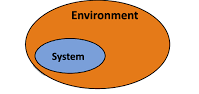
The Separation Theory holds that modern law, property law, land law, constitutional law, and environmental law itself, has, over centuries, effected a systematic and irreversible separation of the natural world from legal subjectivity. Nature has not been ignored by law. It has been actively constituted as an object of law rather than a subject of it. It is something that can be owned, exploited, traded, damaged, and compensated for, but never something that can hold rights, assert claims, or appear before a court in its own name.
This separation did not happen accidentally. It was effected through seven distinct legal operations, which I identify as the seven layers of legal separation.
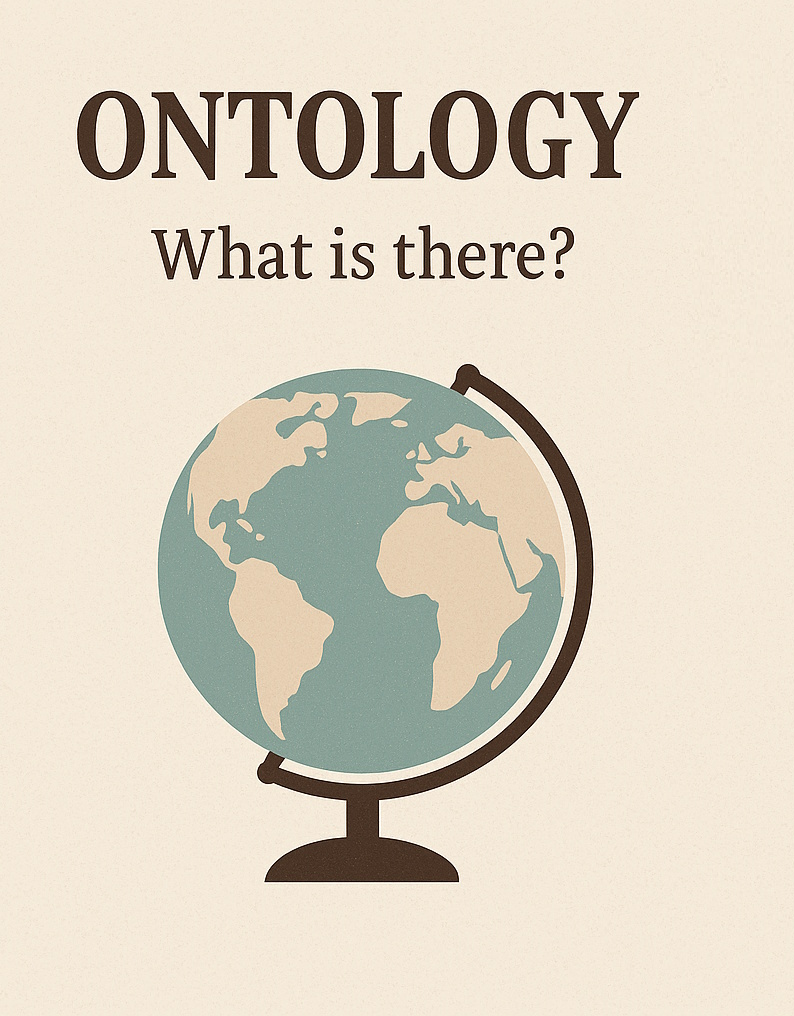
The ontological layer is the deepest. It is the jurisprudential premise, embedded in Western legal thought since Roman law, that only human beings, and entities legally assimilated to human beings, such as corporations, can be bearers of legal rights. Nature, by definition, cannot be a legal person. This premise is so foundational that it is rarely stated explicitly. It operates as an invisible axiom.
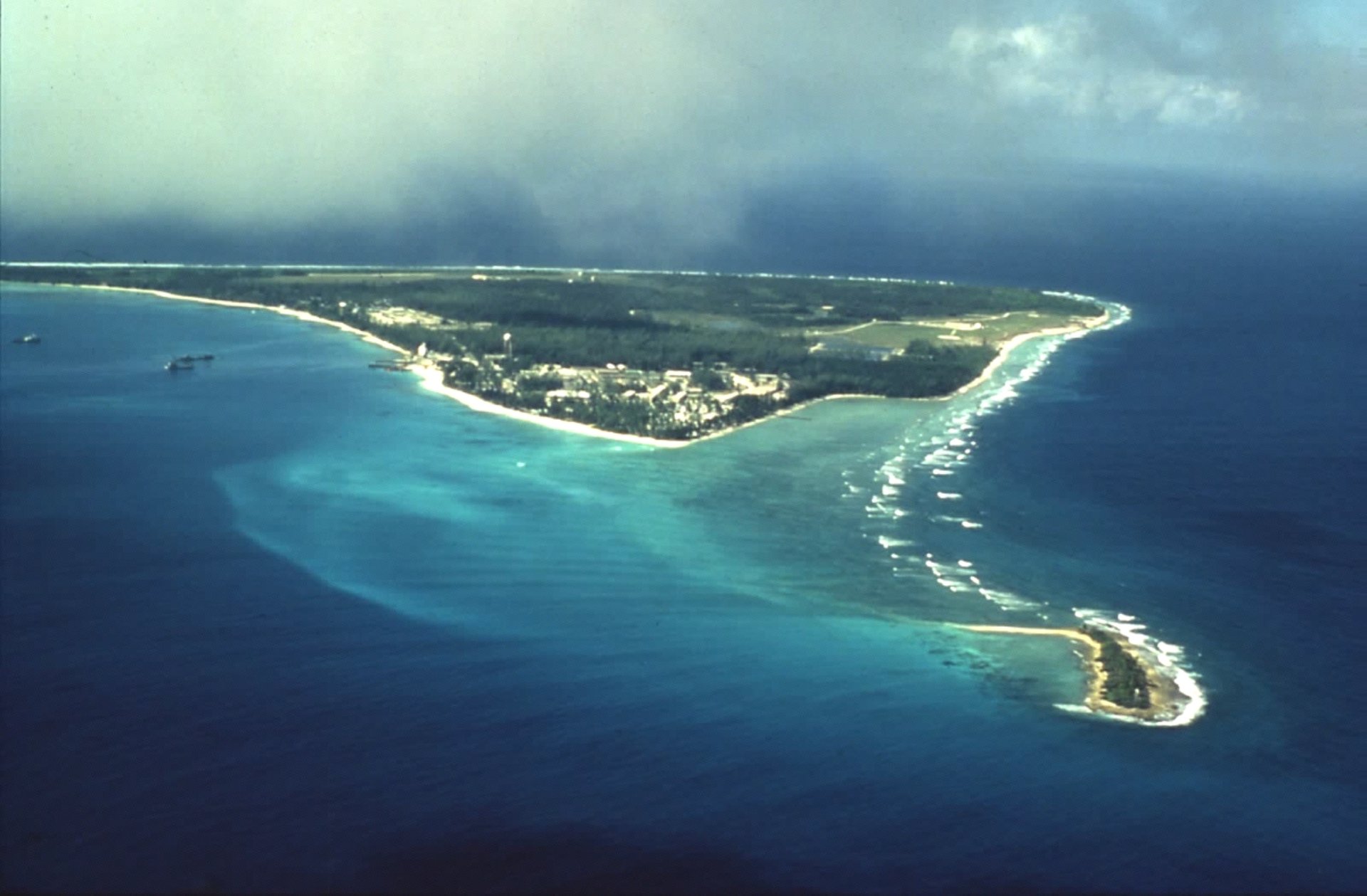
The territorial layer is the legal operation by which physical land and natural space are brought within the jurisdiction of the state and subjected to state-controlled legal regimes. Colonial law was the primary instrument of this operation, the Foreign Jurisdiction Acts, the Crown Lands Ordinances, the Orders-in-Council that extinguished indigenous relationships with land and substituted state sovereignty.
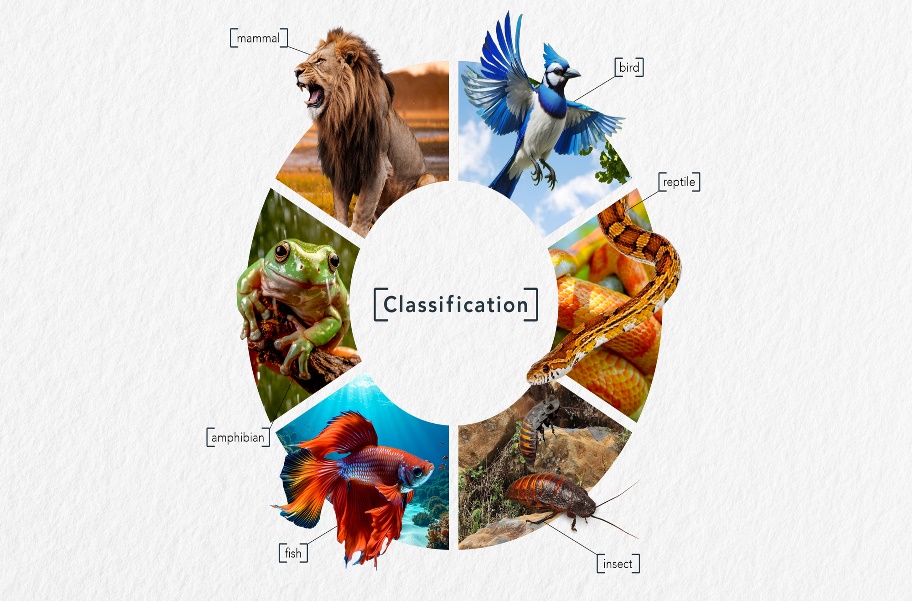
The classificatory layer is the operation by which law sorts the natural world into categories, land, water, minerals, forests, wildlife, that are defined by their utility to human legal actors rather than by their ecological relationships. A river is not a living system under this classification. It is a watercourse, a boundary, a source of irrigation rights, a navigable channel. Each classification severs the river from its ecological identity and reconstitutes it as a legal instrument.
The proprietary layer converts classified natural resources into objects of ownership. Once classified, land becomes a title. Water becomes a water right. Minerals become a mining concession. Ownership is the mechanism by which nature is made available for exploitation within the legal framework without that exploitation constituting a legal wrong.

The registrational layer entrenches proprietary separation through systems of title registration. Once a title is registered, the law's primary concern becomes the protection of the registered interest, not the ecological condition of the land to which that interest relates. Indefeasibility, the principle that a registered title cannot be defeated, means that ecological damage caused in the exercise of a registered right is legally invisible to the title system.

The financial layer translates natural resources into economic value through markets, taxation systems, carbon credits, and ecosystem service payments. This layer is particularly insidious because it presents itself as environmental protection, we are, after all, putting a price on nature. But pricing nature does not protect it. It integrates it more deeply into the economic system that is driving its destruction.

The informational layer is the most recent. It is the legal architecture governing environmental data, disclosure requirements, environmental impact assessments, monitoring obligations. This layer creates the appearance of transparency and accountability while leaving the underlying proprietary and financial structures entirely intact. You must disclose the damage. You are not required to prevent it.

Why Seven Layers Matter
The power of the Separation Theory is not in identifying that nature is excluded from law, others have noted that. The power is in identifying how that exclusion is effected, layer by layer, through specific legal instruments and doctrinal operations. Each layer is analytically distinct. Each has its own historical genealogy. And crucially, each layer has its own logic of irreversibility.
This is what I call the Irreversibility Ratchet. Each layer of legal separation, once established, generates interests, property rights, registered titles, financial instruments, contractual entitlements, that subsequent law must recognize and protect. Reversing the separation at any one layer requires overcoming the entrenched interests created by all the layers above it. The ratchet only turns one way.
This is why Rights of Nature legislation so frequently disappoints in practice. A constitutional provision granting rights to nature, however sincerely intended, is operating at the ontological layer. But the proprietary, registrational, and financial layers remain intact beneath it. The right is recognized. The title is still registered. The mining concession is still valid. The carbon credit is still tradeable. The constitutional provision sits on top of an undisturbed architecture of separation, and the architecture wins.
Productive and Escaping Fictions
This brings me to the second analytical contribution of the study: the concept of actio ficticia as applied to Rights of Nature.
In Roman law, an actio ficticia was a legal fiction that allowed a court to treat a situation as if it were something it was not, in order to achieve a just outcome that the existing law could not otherwise reach. The fiction was a device of reconnection, it bridged a gap in the law by temporarily suspending a rule that was producing an unjust result.
I argue that Rights of Nature instruments are, in jurisprudential terms, instances of actio ficticia. They treat nature as if it were a legal person, in order to bring it within the protective reach of law. The question is not whether they are fictions, they are, but whether they are productive fictions or escaping fictions.
A productive fiction is one that genuinely penetrates and disrupts at least one of the seven layers of legal separation. Ecuador's constitutional Rights of Nature, at its best, is an attempt at a productive fiction, it challenges the ontological layer directly and creates a legal basis for challenging proprietary and classificatory decisions that damage ecosystemic integrity.
An escaping fiction is one that adopts the language of Rights of Nature while leaving all seven layers of separation undisturbed. It gives nature a name in the law without giving it a place. The right is proclaimed. The separation continues. The fiction escapes its own purpose.
The difference between a productive and an escaping fiction is not always visible on the face of the instrument. It becomes visible only when you map the instrument against the seven layers and ask: which layers does this actually penetrate? Which interests does it actually disturb? What happens when the right conflicts with a registered title or a valid mining concession? Who wins?
Why This Matters
The Separation Theory is not an academic exercise. It is a diagnostic instrument. It tells lawyers, legislators, and activists exactly where to look when a Rights of Nature instrument fails, and exactly what needs to change for it to succeed.
If the ontological layer is undisturbed, the rights will be unenforceable. If the proprietary layer is undisturbed, the rights will be defeated by existing titles. If the registrational layer is undisturbed, the titles will remain indefeasible. If the financial layer is undisturbed, the economic incentives for destruction will remain. If the informational layer is undisturbed, disclosure will substitute for accountability.
Genuine legal reconnection, giving nature a real and enforceable place in law, requires engagement with all seven layers, not merely the most visible one. That is the hard work that most Rights of Nature instruments have not yet done.
That is the work this study sets out to map.
Cindano wa Gakuru is a legal researcher in environmental law.